
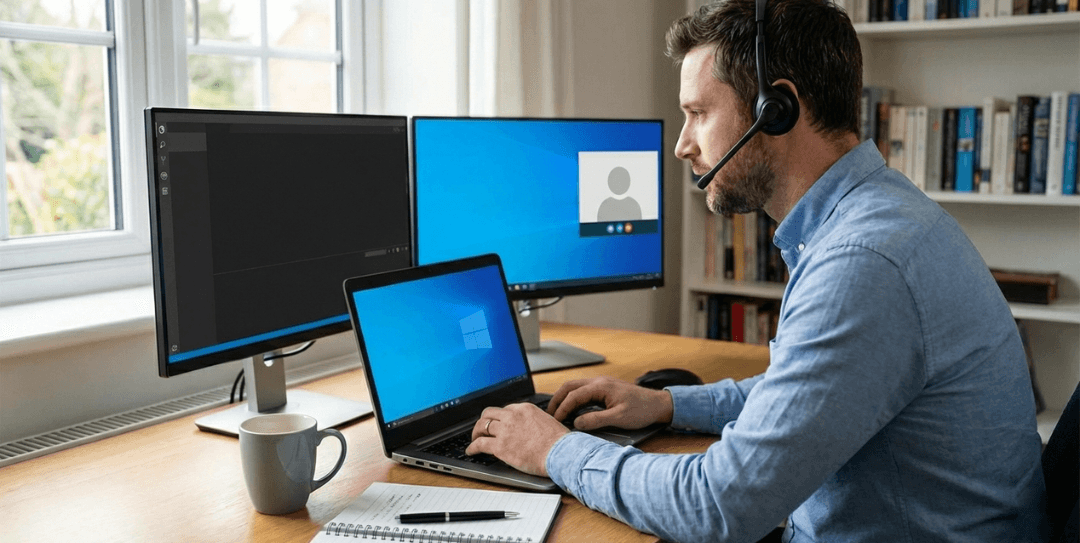
Remote IT Support in UAE: The Modern Standard for Business Efficiency
In the fast-paced commercial landscape of the United Arab Emirates, time is the most valuable currency. For businesses in Dubai and Abu Dhabi, waiting hours for a technician to navigate traffic just to fix a software glitch is no longer an acceptable operational standard.
This is why remote IT support in UAE has evolved from a convenience into a critical business necessity.
With the rise of hybrid work models and the increasing complexity of digital infrastructure, organizations require immediate technical assistance. Downtime, whether caused by a server error or a simple email configuration issue, directly impacts revenue and productivity.
Remote IT support bridges the gap between technical failure and resolution instantly. This guide explores how remote services work, why they are the strategic choice for UAE businesses, and how to select a provider that prioritizes security and speed.
What Remote IT Support Means for Businesses
Remote IT support in UAE refers to the delivery of technical assistance where IT specialists access your systems from an off-site location to diagnose and resolve issues.
Using advanced, encrypted software tools, technicians can view your screen, control your mouse, and troubleshoot operating systems as if they were sitting right next to you.
For modern enterprises, this means having a virtual IT department on standby, capable of supporting employees whether they are in the corporate office in Business Bay, a branch in Sharjah, or working from home.
How Remote IT Support Works in Real-World Scenarios
The process is designed for speed and security. When an employee encounters an issue, the workflow typically follows these steps:
- Ticket Initiation: The user contacts the helpdesk via phone, email, or a dedicated portal.
- Secure Connection: The technician requests permission to access the device using secure remote support software.
- Diagnosis: The engineer analyzes logs, checks configurations, and replicates the error in real-time.
- Resolution: The issue is fixed—software is patched, settings are adjusted, or malware is removed.
- Verification: The user confirms the system is working correctly before the session is closed.
This seamless process handles the vast majority of daily IT challenges without a physical technician ever stepping foot in the office.
Benefits of Remote IT Support for UAE Companies
Adopting a remote support model offers tangible strategic advantages for businesses operating in the UAE.
1. Instant Resolution and Uptime
The primary benefit is speed. Traffic congestion between emirates or within city centers can turn a 15-minute fix into a 3-hour ordeal if relying on onsite visits. Remote support eliminates this latency, ensuring staff get back to work almost immediately.
2. Significant Cost Reductions
Onsite visits incur travel costs and higher hourly rates to cover the engineer’s transit time. Remote IT support in UAE is typically offered at a lower cost or as part of a flat-rate managed services package, providing predictable budgeting.
3. Access to Specialized Expertise
A local onsite technician might be a generalist. Through remote support, your business gains access to a centralized team of specialists. If a complex server issue arises, the helpdesk can instantly escalate the session to a senior server architect, ensuring the right expert solves the problem.
4. Support for a Distributed Workforce
With many UAE companies adopting flexible working arrangements, employees are no longer confined to a single building. Remote support ensures that every team member receives the same level of enterprise-grade assistance, regardless of their physical location.
Common IT Issues Solved Through Remote Support
Contrary to popular belief, the vast majority of IT problems do not require physical intervention. Remote support effectively handles:
- Email Configuration: Troubleshooting Outlook, Microsoft 365, and exchange server connectivity.
- Software Installation: Deploying updates, patches, and installing new business applications.
- Performance Optimization: Cleaning temporary files, removing bloatware, and optimizing registry settings to speed up slow computers.
- Security Management: Running virus scans, removing malware, and configuring firewalls.
- Peripheral Connectivity: Mapping network printers and troubleshooting scanner drivers.
- User Administration: Resetting passwords and managing access permissions for new hires or exits.
Remote IT Support vs. On-Site IT Support
Understanding when to use remote versus on-site support is key to optimizing your IT strategy.
Remote IT Support
- Best for: Software issues, configuration errors, user administration, and maintenance.
- Speed: Immediate / On-demand.
- Cost: Lower cost per incident or included in monthly fees.
On-Site IT Support
- Best for: Hardware failures (hard drive crash), physical network cabling, internet outages, and device setup.
- Speed: Requires travel time and scheduling.
- Cost: Higher due to logistics and dedicated time.
A balanced IT strategy prioritizes remote support for 90% of issues, reserving onsite visits only for hardware-critical emergencies.
Is your business equipped for rapid remote resolution?
Delays in support are costing you money. Determine if your current infrastructure is ready for enterprise-grade remote assistance.
Security Considerations in Remote IT Support
Security is a paramount concern for UAE businesses, especially given local data compliance regulations. Professional remote support is secure by design.
- Encryption: All remote sessions should use end-to-end 256-bit AES encryption, similar to online banking standards.
- Permission-Based Access: Technicians should not be able to access a device without the user’s explicit consent for each session.
- Audit Trails: Every session is logged and recorded. This provides accountability and ensures compliance with internal governance policies.
- Two-Factor Authentication (2FA): Access to the remote support tool itself is protected by 2FA, preventing unauthorized use.
How to Choose the Right Remote IT Support Provider in UAE
Not all providers offer the same level of security or competency. When selecting a partner for remote IT support in UAE, evaluate them against these criteria:
1. Response Time Guarantee
Review the Service Level Agreement (SLA). Does the provider guarantee a response within 15 minutes, or is it “best effort”? In a crisis, every minute counts.
2. Tools and Technology
Ask what software they use. Enterprise-grade tools (like TeamViewer, ConnectWise, or AnyDesk Enterprise) offer superior security compared to free consumer-grade alternatives.
3. Local Helpdesk Availability
Ensure the helpdesk is based in the UAE or operates during UAE business hours. Language barriers and time zone differences can frustrate users and delay resolutions.
4. Comprehensive Skill Set
The provider should demonstrate expertise across Windows, macOS, cloud platforms, and server environments. Your business likely uses a mix of technologies, and your support partner must be capable of handling them all.
Frequently Asked Questions (FAQ)
Is remote IT support safe for sensitive business data? Yes. Reputable providers use encrypted connections and permission-based access protocols. They ensure that no data is transferred without authorization and that all sessions are logged for security auditing.
Can remote support fix internet connectivity issues? To a limited extent. If the device has no internet, remote access is impossible. However, technicians can often guide users over the phone to restart routers or check cables to restore the connection, then take over remotely.
How much does remote IT support cost in UAE? Pricing models vary. Some providers charge per incident, while managed IT support packages include unlimited remote support for a fixed monthly fee per user. The latter is generally more cost-effective for businesses.
What happens if the issue cannot be fixed remotely? If a remote technician determines the issue is hardware-related or too complex for remote tools, the ticket is escalated to an onsite team. A reliable provider will seamlessly dispatch an engineer to your location.
Does remote support work on Apple Mac computers? Yes. Professional remote support tools are platform-agnostic, allowing engineers to troubleshoot and fix issues on Windows, macOS, and Linux systems effectively.
Conclusion: Speed and Efficiency for the Modern Enterprise
In a business environment that never stops, waiting for IT support is a liability. Adopting remote IT support in UAE transforms your technology from a bottleneck into an enabler of efficiency.
By choosing a professional provider, you ensure that your team has instant access to expert help, your data remains secure, and your operational costs are optimized. Speed is the new standard; ensure your business is keeping pace.
At 800 IT Care, we provide rapid, secure, and expert remote support to businesses across the UAE. We are ready to solve your IT challenges instantly.
Need Immediate IT Support?
Don’t let technical issues stall your operations. Connect with our expert helpdesk now for instant resolution.